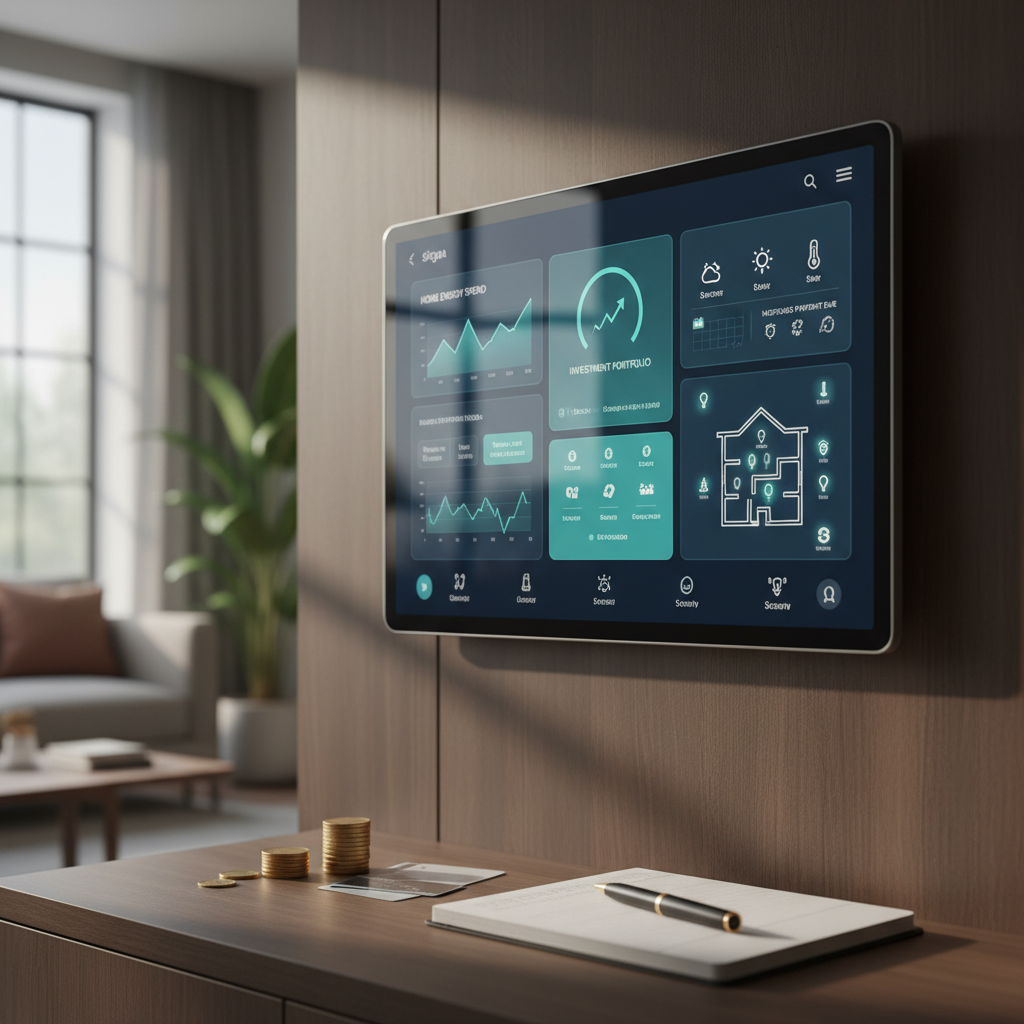
Why Consolidate? The Financial Upside of a Centralized Smart Home Dashboard
Beyond mere convenience, establishing a centralized smart home dashboard offers significant financial benefits that savvy homeowners shouldn’t overlook. Imagine effortlessly managing lighting, HVAC, and appliances from one intuitive interface. This streamlined control isn’t just about comfort; it dramatically reduces wasted energy and enhances overall energy efficiency, directly translating to lower utility bills. Integrated data from all your devices provides powerful, actionable insights into your household’s precise energy usage costs, empowering smarter consumption decisions.
Furthermore, modern amenities, particularly a sophisticated smart home system, contribute to increased property value, making your home more attractive to future buyers. Improved security through unified monitoring of cameras, locks, and alarms can also potentially lead to reduced home insurance premiums or prevent costly losses. Ultimately, the cumulative cost savings from optimized device interaction, reduced manual oversight, and a comprehensive understanding of your home’s operational expenses paint a clear picture of a compelling return on investment, as seen in various analyses of smart home device ROI. Now that we understand the value proposition, how do you actually fund such an upgrade? Let’s delve into budgeting options, from DIY setups to commercial solutions.
Budgeting Your Smart Home: DIY vs. Commercial & Open-Source vs. Proprietary
Once you’re convinced of the financial benefits of a centralized smart home dashboard, the crucial next step is crafting a solid smart home budgeting plan. This isn’t just about the initial outlay, but also understanding the long-term expenses and returns. You essentially face two main paths: the do-it-yourself (DIY) route or opting for commercial smart home systems.
For the intrepid DIY enthusiast, platforms like a Raspberry Pi running Home Assistant offer an enticingly low DIY smart home cost upfront. You gain incredible flexibility and zero licensing fees thanks to the open-source smart home platform model, backed by a robust community. However, this path demands a significant investment of your time, a factor often overlooked in the “cost” equation – remember, time is money. There can also be hidden costs in troubleshooting, learning curves, and sourcing individual components. For those considering a build, resources like this guide on complete smart home monitoring can be invaluable.
Conversely, commercial smart home systems from providers like Samsung SmartThings or Vivint offer ease of installation and out-of-the-box functionality. While the upfront hardware costs might be higher, and they often come with recurring subscription fees for premium features or monitoring, they deliver convenience and dedicated support. These often leverage a proprietary smart home ecosystem, which can mean seamless integration but also potential vendor lock-in. Regardless of your choice, a smart financial strategy is to consider phased investment, starting with core functionalities and expanding as your budget allows, maximizing your smart home ROI over time.
Understanding these financial models is the first step; next, let’s explore how your platform choice directly impacts your overall financial strategy for hardware and software.
Choosing Your Platform: The Financial Strategy Behind Hardware & Software
Your selection of a core smart home platform is perhaps the most pivotal decision, setting the financial trajectory for your entire system. A robust central hub, whether a dedicated server, a versatile smart display, or a specialized automation controller, represents a significant smart home hardware cost. Prioritizing longevity and processing power in this initial investment helps future-proofing smart home capabilities, avoiding premature and costly replacements.
When it comes to smart home software, solutions like Home Assistant or OpenHAB offer immense flexibility and can minimize recurring costs, though they may demand a steeper learning curve or more initial setup time. Conversely, commercial options like SmartThings or Hubitat provide user-friendly interfaces but might come with associated subscription fees or vendor-specific limitations impacting long-term extensibility. Understanding communication protocols—Zigbee, Z-Wave, Wi-Fi, and the promising Matter standard—is equally vital. Your hub’s support for a broad range of these ensures better device compatibility and enhances scalability, preventing expensive overhauls as your system grows. When planning, assess the stability and support of your chosen vendors; a platform with a strong community or corporate backing protects your investment, as outlined in guides for developing home automation systems. For a deeper dive into building custom smart home solutions, consider this guide.
With your core platform and financial framework in place, the next step involves maximizing the value of your chosen system by thoughtfully integrating individual devices.
Integrating Devices: Maximizing Value Through Seamless Connectivity
With your central hub selected, the real work—and the real opportunity for a truly cost-effective smart home—lies in intelligent smart device integration. Instead of rushing to buy the latest gadgets, first assess your existing smart devices. Can your older smart plugs, cameras, or sensors be brought into your new centralized system? Leveraging what you already own significantly reduces initial expenditure and helps you avoid immediate costly replacements.
When acquiring new components, prioritize device compatibility above all else. Opt for devices supporting open standards, especially Matter, to prevent future vendor lock-in and ensure your system remains flexible and future-proof. The financial impact of incompatible tech cannot be overstated; replacing devices that don’t play well together can quickly erode your budget. Furthermore, a robust network foundation is non-negotiable. Ensure your home network, perhaps even upgrading to a mesh Wi-Fi system, can handle the increased traffic for stable and efficient communication, minimizing frustrating troubleshooting costs down the line. For advanced security, consider strategies like VLANs for home network security. Learn more about optimizing your home network for smart devices.
With a thoughtfully integrated and stable network of devices, you’re ready to visualize their collective performance and potential savings.
Designing Your Dashboard Interface for Financial Insights
With your devices seamlessly integrated, the focus shifts to creating a Centralized Smart Home Dashboard that acts as your financial command center. Prioritize dashboard interface design to prominently feature key financial metrics like real-time energy consumption tracking and estimated monthly utility bills. For deeper financial insights, explore options for advanced personal finance integration, linking your smart home data with existing budgeting apps via APIs.
Effective data visualization is crucial here; think dynamic graphs comparing electricity usage month-over-month or appliance-specific consumption trends. Mastering Your Smart Home Dashboard Layout can offer guidance on clarity. Set up smart alerts for unusual energy spikes or device malfunctions that could unexpectedly inflate costs. Beyond monitoring, empower yourself with custom controls to optimize energy-consuming devices based on current utility rates or predefined budget goals, turning data into direct savings. This proactive approach lays the groundwork for leveraging true automation…
Leveraging Automation for Cost Savings and Enhanced Security ROI
With your centralized dashboard now providing clear financial insights, the true power of smart home automation comes to life, translating data into tangible savings and enhanced security. Imagine your home proactively managing itself: lights dimming or turning off based on occupancy, thermostats adjusting for optimal comfort and energy prices, or appliances running only during off-peak utility hours. Setting up these intelligent automation rules is a game-changer for your wallet, allowing your home to dynamically respond to your schedule and the grid, minimizing waste without sacrificing convenience.
The energy cost savings from a smart thermostat alone can often deliver a significant return on investment within a couple of years, with smart lighting systems further reducing electricity bills by tailoring illumination to need. But the financial benefits extend beyond energy. Consider the profound smart home security ROI. Implementing automated smart locks, integrated cameras, and motion sensors doesn’t just offer unparalleled peace of mind; it translates into tangible financial benefits. Many insurance providers offer attractive insurance discounts for homes equipped with robust smart security systems, directly reducing your annual premiums. More critically, proactively preventing theft or damage through these advanced deterrents can save you thousands in potential losses and repair costs. For more on this, check out Unlocking Insurance Savings with Smart Home Tech.
Furthermore, remote energy management capabilities allow you to monitor and control your home’s systems from anywhere, ensuring no lights are left on or doors unlocked, preventing costly mishaps even when you’re away. However, as we embrace the incredible convenience and savings automation offers, it’s crucial to acknowledge the underlying technological infrastructure and its associated considerations…
The Hidden Costs: Data Privacy, Security Risks, and Ongoing Maintenance
While the benefits of a centralized smart home dashboard often spotlight convenience and savings, it’s equally crucial for homeowners to understand the less visible, but potentially significant, financial risks involved. Overlooking these aspects can turn a smart investment into a costly liability. A primary concern revolves around smart home data privacy risks. Consolidating all your devices under one digital roof means a wealth of personal and sensitive information – from daily routines to financial habits – is collected and stored. Should this centralized system be compromised, the financial risks of data breaches are substantial, potentially leading to identity theft, financial fraud, or even reputational damage, each carrying a heavy price tag beyond monetary loss.
To mitigate these vulnerabilities, investing in robust security measures is a non-negotiable financial safeguard. This means implementing strong, unique passwords, enabling two-factor authentication (2FA) across all integrated services, and considering network segmentation to isolate critical devices. Proactive protection is always cheaper than reactive recovery. For guidance on safeguarding your digital perimeter, check out Protecting Your Digital Home.
Beyond security, ongoing maintenance costs are an inherent part of smart home ownership. This includes regularly updating software and firmware, addressing potential bugs, and factoring in the eventual need to replace or upgrade hardware as technology evolves. Many advanced features also come with recurring subscription fees for services like cloud storage, premium integrations, or professional monitoring, significantly adding to your smart home security costs over time. Finally, few consider the “exit strategy” – the potential cost and effort required to dismantle, migrate, or reconfigure your entire system if you move or decide on a different platform.
Understanding these underlying costs empowers you to budget wisely and build a more resilient smart home. By addressing these factors head-on, you’re not just protecting your data; you’re safeguarding your long-term financial health and ultimately, positioning your home for enhanced value.
Boosting Your Property Value: Smart Home as a Long-Term Investment
Beyond the immediate conveniences and enhanced security, a thoughtfully designed Centralized Smart Home Dashboard transforms your residence into a future-proof asset, significantly enhancing its market appeal and long-term property value smart home. Today’s prospective buyers are increasingly discerning, looking past superficial aesthetics to prioritize homes equipped with modern efficiencies. Features like smart thermostats, integrated security systems, and automated lighting are no longer niche; they’re becoming expected amenities that demonstrably increase buyer interest.
Crucially, it’s not just about having a collection of smart gadgets. A haphazard array of disparate devices offers minimal uplift to your home valuation. What truly resonates and commands a premium is a truly centralized and integrated system, offering seamless control and demonstrating a sophisticated, efficient, and secure living environment. This unified approach signals ease of use and a modern lifestyle to potential buyers, positioning your home as a desirable, turn-key solution.
Studies indicate that homes with integrated smart features can see a tangible percentage point increase in home valuation, effectively turning your initial outlay into a robust long-term investment. For more strategic insights on leveraging smart tech to maximize property gains, explore resources like those at Financial Foundations on Smart Homeownership Strategies. Such an upgrade positions your property as a modern, efficient, and secure asset, setting it apart in a competitive market. And these financial benefits extend beyond resale; a smart home investment also yields consistent ongoing returns.
Calculating Your ROI: Energy Savings and Beyond
Beyond boosting your property’s resale value, a centralized smart home dashboard delivers measurable financial returns that directly impact your monthly budget. Let’s walk through a practical smart home ROI calculation, starting with the most direct savings: energy. Begin by scrutinizing your utility bills before and after integrating smart thermostats, lighting, and appliance controls. Many smart energy devices provide granular consumption data, making energy savings analysis straightforward. For instance, smart thermostats can typically reduce heating and cooling costs by 10-15%, translating into substantial annual savings for the average household.
Don’t overlook the potential for insurance premium reduction. Many home insurance providers offer discounts for properties equipped with enhanced security features like smart locks, surveillance systems, and leak detectors. These proactive measures reduce claim risks, often leading to tangible savings on your homeowner’s policy. While harder to quantify, the value of time saved through automation and centralized control also contributes to your return on investment. Imagine the hours regained by automating routine tasks, from managing lighting schedules to monitoring home security. If you assign an hourly value to your time, these minutes saved can add up to meaningful personal dividends.
For more detailed projections on typical payback periods for various smart home components, resources like Smart Home Device ROI: A Guide for Pro Builders can provide valuable benchmarks. Ultimately, integrating your smart home’s performance data with your existing personal finance tracking tools offers the most comprehensive financial overview. This holistic approach proves your dashboard isn’t just a convenience, but a continuous money-saver, actively contributing to your financial well-being. Understanding these ongoing returns is key to appreciating the enduring value of your smart home, and how to keep it relevant and profitable for years to come.
Future-Proofing Your Smart Home Investment
Building a Centralized Smart Home Dashboard isn’t a static endeavor; it’s an evolving asset. To truly future-proof your smart home investment, prioritize systems that embrace open standards and widely supported communication protocols. This foresight ensures your ecosystem remains compatible with new devices and platforms down the line, preventing costly overhauls. Opt for a modular smart home design wherever possible, allowing for easy upgrades and expansions rather than complete replacements as technology advances.
Staying informed about emerging smart home trends, such as the unified Matter standard and increasing AI integration, is also crucial. Resources like Vivint’s Smart Home Trends 2025 can offer valuable insights into what’s next. Regular software updates and security patches are non-negotiable for protecting your investment and maintaining optimal performance. By building a flexible and adaptable smart home foundation, your dashboard will continue to serve your financial goals and technological needs for years to come.

Senior technology analyst covering enterprise software, AI, and digital transformation. James has spent over a decade helping business leaders understand how emerging tech reshapes competitive strategy.