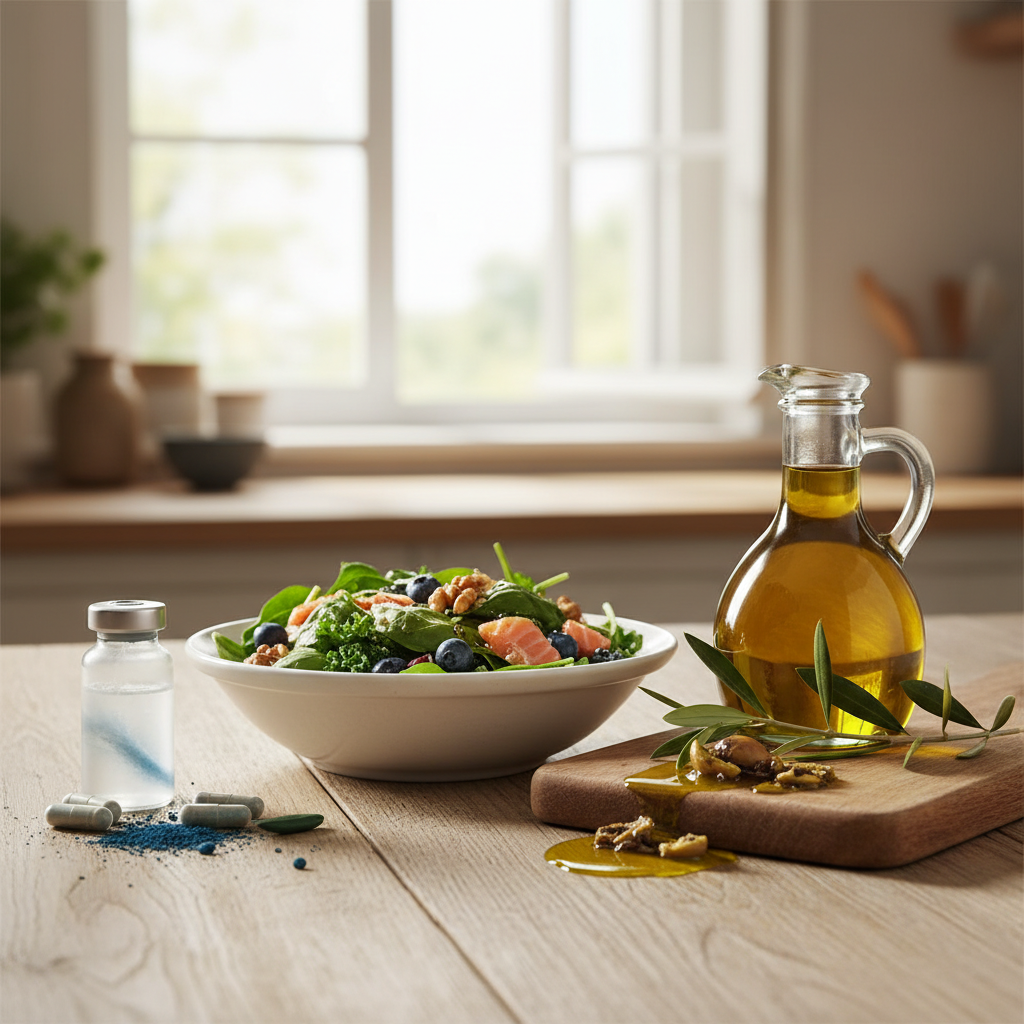
Peptide health benefits are truly revolutionizing wellness, but their actual, profound impact only really clicks when you connect them to bigger, smarter nutritional strategies. This deep dive uncovers the essential link between how peptides work, those specific diets that fight cognitive decline, and that wildly popular olive oil trend. It’s about revealing a unified, practical approach to long-term cellular and neurological health—and frankly, that matters now more than ever.
The Cellular Blueprint Why Peptide Health Benefits Are Foundational
To truly grasp the profound peptide health benefits we’re seeing today, we simply have to move past the textbook definition that calls them ‘short chains of amino acids.’ While technically true, that’s like saying a key is just a piece of shaped metal. It completely misses the point, doesn’t it? Their real power isn’t in what they are, but in what they do. Peptides are basically the biological equivalent of text messages for your cells. They’re specific, targeted instructions that tell cells exactly what to do next: maybe initiate repair, dial down inflammation, produce collagen, or even fine-tune your metabolism. They really are the core language of cellular biology.
Think of your body as a massive, sprawling construction project. The proteins you eat? Those are your raw materials—the bricks, steel, and concrete. Your cells are the workers, ready to build. But what tells them what to build? Or when to repair a crumbling wall that’s seen better days? That, my friend, is the job of peptides. They’re the project foremen, walking around with blueprints, shouting specific instructions. One peptide might yell, “Hey, skin cell, we need more collagen over here, ASAP!” while another signals a muscle cell to immediately begin repairing a tear after a tough workout. Without these precise instructions, the workers would just stand around with a pile of bricks, utterly unsure of what to do. This is precisely why just flooding your system with protein isn’t the whole story; you genuinely need the signals to direct the entire process effectively.
Here’s where it gets absolutely critical for aging and, especially, cognitive health. As we get older, our body’s natural production of these specific signaling peptides — those vital foremen — naturally declines. The foremen get quieter, and fewer of them even show up to the job site. The result? Communication just breaks down. Repair processes slow to a crawl, inflammation goes unchecked, and the overall system simply becomes less efficient. This isn’t just some random side effect of aging; many researchers now actually see this communication breakdown as a fundamental driver of age-related decline. Before you can even begin to think about complex issues like neurological health, you really have to address this foundational layer of cellular instruction. If the basic repair commands aren’t getting through, the entire structure inevitably weakens.
This reveals a kind of hidden truth that actually challenges a common expectation. Most people assume that eating a high-protein diet is the ultimate, silver-bullet solution for repair and muscle maintenance. In reality, while absolutely essential, it’s only half the equation. You can have all the building materials in the world, but without the specific instructions from peptides, they may not be used effectively for specialized tasks. The hard truth is that simply eating protein-rich foods doesn’t guarantee your body will create or absorb the specific signaling peptides needed for complex tasks like neural repair. Many are broken down during digestion into basic amino acids, unfortunately erasing the very message they were meant to carry.
This gap between dietary intake and cellular signaling is precisely what’s fueling the massive trend in peptide supplements and therapies right now. We’re witnessing a broader, fascinating shift in wellness: moving from simply supplying the body with raw nutrients to actively providing it with biological information. The tension point, however, is significant. While targeted, synthetic peptides offer incredible promise (and they do!), the science is complex and still emerging, and honestly, not all delivery methods are effective. Oral supplements, for instance, face the huge hurdle of stomach acid, meaning many products on the market may offer little more than expensive amino acids. This transition from macro-nutrition to micro-signaling represents a more precise, but also a more complicated, frontier in personal health.
Ultimately, recognizing peptides as these foundational messengers completely reframes how we approach health and longevity. It’s not just about warding off disease but about actively maintaining the intricate communication network that keeps our bodies regenerating. If these tiny molecules orchestrate everything from skin elasticity to our immune response, their role in maintaining our most complex and energy-demanding organ—the brain—becomes an absolutely critical focus. This cellular-level communication, you see, is the prerequisite for cognitive vitality, setting the stage for understanding how specific diets can do so much more than just provide fuel; they can actually help preserve the very instructions that keep our minds sharp.
Beyond Nutrients How Peptides Power Dementia-Prevention Diets
When we talk about brain-healthy eating patterns like the Mediterranean or MIND diet, the conversation usually revolves around familiar heroes: omega-3s from fish, antioxidants from berries, and healthy fats from nuts. We picture these nutrients entering our system like tiny soldiers, directly fighting off cognitive decline. But this view, while partially true, misses the more profound mechanism at play. The real power of these diets isn’t just in the nutrients they provide, but in what our body builds with them. They are, fundamentally, pro-peptide diets, designed to supply the precise raw materials our bodies need to manufacture their own internal defense force against neurodegeneration.
Most people assume that eating protein-rich foods like lentils or salmon is primarily for muscle maintenance. In reality, the body is far more creative. It breaks down that protein into its constituent amino acids and reassembles them into thousands of different peptides, each with a specific job. Some of these are neuropeptides, which act as powerful signaling molecules within the brain. What’s often overlooked is that the success of these diets hinges on this constant, efficient biological manufacturing. Foods recommended in the MIND diet aren’t just a random collection of healthy items; they are a curated toolkit.
- Lean proteins (fish, legumes): Provide the essential amino acid building blocks.
- Leafy greens (kale, spinach): Deliver folate and B vitamins, critical co-factors for the enzymatic reactions that create peptides.
- Berries and nuts: Offer micronutrients and flavonoids that protect newly synthesized peptides from oxidative stress.
This is not just about avoiding bad foods; it’s an active strategy to fuel a specific molecular assembly line. The true peptide health benefits are realized when the body has a consistent supply of both the bricks and the mortar to build and maintain cognitive resilience.
This is where the science gets personal, directly impacting the battle against neuroinflammation—a key driver of diseases like Alzheimer’s. Think of chronic inflammation in the brain as a constant, low-level fire that damages neurons over time. Certain peptides, synthesized from the components of a Mediterranean-style diet, act as biological fire extinguishers. They can signal to the brain’s immune cells, the microglia, to switch from a pro-inflammatory state to a calmer, protective one. This isn’t a passive process. It’s an active, ongoing dialogue between your diet and your brain’s cellular environment, a conversation conducted in the language of peptides. The real-world impact is that every meal becomes an opportunity to either fan the flames of inflammation or to send in a team of molecular peacekeepers.
But here’s where things get more complicated, and where many popular health narratives fall short. The simple equation of ‘good food in, good peptides out’ is a dangerous oversimplification. The hard truth is that dietary intake does not guarantee optimal peptide production. This is the critical limitation often ignored. An individual’s genetics, gut microbiome health, and age all dramatically influence their ability to break down proteins and synthesize specific peptides efficiently. This explains why two people can follow the exact same diet yet experience vastly different cognitive outcomes. It introduces a tension point: the immense potential of dietary intervention versus the frustrating reality of individual biological variance. This isn’t a failure of the diet, but a reflection of our own unique, complex machinery.
This complexity is subtly shaping market behavior and consumer trends. We’re seeing a massive shift away from generic multivitamins toward targeted, functional foods and supplements aimed at “brain health.” The consumer is buying into the promise, but often with a flawed understanding, focusing on single “superfoods” like walnuts or blueberries. The hidden truth, however, is that the protective effects don’t come from one ingredient but from the synergistic environment created by the entire dietary pattern. A diet rich in amino acids and micronutrients creates a system resilient enough to support consistent peptide synthesis. The most significant trend isn’t the rise of any single ingredient, but the slow, growing recognition that we must manage the entire biological system, not just supplement its parts.
Ultimately, this deeper understanding of peptide health benefits is pushing us beyond generalized dietary advice and toward a future of personalized neurological nutrition. It’s a future where we might analyze an individual’s ability to create specific neuroprotective peptides and tailor their diet to support those unique needs. This isn’t just about what to eat, but how to create the ideal internal conditions for these powerful molecules to work. This brings us to a crucial element in creating that environment—the fats we consume. And few have captured the public’s imagination quite like olive oil, which acts as more than just a source of calories, but as a key modulator of the very inflammatory landscape our peptides are trying to manage.
Deconstructing the Viral Olive Oil Trend From Fad to Functional Science
It’s impossible to ignore, isn’t it? Scroll through social media, and you’ll inevitably see someone, somewhere, taking a daily “shot” of olive oil, touting it as a cure-all. It certainly feels like the wellness trend of the moment, easy enough to dismiss as just another fleeting fad. But what’s often overlooked in these viral clips is that beneath all the hype, there’s a fascinating layer of functional science that connects directly to the dietary strategies we’ve been discussing. The real story isn’t about haphazardly drinking oil; it’s about a specific, powerful compound hidden within the highest quality versions of it.
That compound is called oleocanthal. It’s a natural phenol, and it’s the exact reason why truly good extra virgin olive oil has that distinct peppery, almost spicy sensation at the back of your throat. Most people assume this is a sign of acidity or some kind of defect. The hidden truth is actually the exact opposite: that pungent kick is the biochemical signature of potency. It’s the oleocanthal at work, doing its thing. This single molecule is a powerful, non-steroidal anti-inflammatory, and its mechanism of action in the body is surprisingly similar to that of ibuprofen, albeit at a much lower, dietary-level dose. It works by inhibiting the very same COX enzymes involved in inflammatory pathways.
This is where the connection to our brain-protective diets and peptide functions becomes so incredibly compelling. Chronic, low-grade inflammation is a key antagonist in neurodegenerative diseases, constantly creating a hostile cellular environment that disrupts communication and accelerates damage. The diets we’ve explored, like the MIND and Mediterranean diets, aim to quell this very fire. Oleocanthal from high-quality olive oil acts as a direct, targeted ally in this fight. It helps create the anti-inflammatory backdrop necessary for the body’s own repair systems to function optimally, which in turn supports the powerful cellular work and signaling that are among the core peptide health benefits.
But here’s where things get more complicated, and where the viral trend often leads people astray. The common expectation is that any bottle labeled “olive oil” will automatically deliver these benefits. In reality, most simply won’t. Oleocanthal is delicate; it’s easily destroyed by heat, light, and the refining processes used to make cheap, light-tasting olive oils. Let’s be clear: a spoonful of the wrong olive oil is just a spoonful of empty calories, not a functional food. The tension point for consumers is weighing the significant cost of true, high-phenol extra virgin olive oil against a market flooded with inferior products that offer none of these specific brain-protective effects.
Think of it this way: if bioactive peptides are the specialized workers sent in to repair cellular machinery and optimize signaling, then chronic inflammation is like constant, disruptive noise on the factory floor. They just can’t work effectively, can they? The oleocanthal in premium olive oil doesn’t perform the repair itself, but it acts like noise-canceling headphones for your cells. It reduces the inflammatory static, creating a calmer, more stable environment. This synergy is absolutely crucial, allowing the full spectrum of peptide health benefits, from cellular regeneration to neurotransmitter support, to be expressed more efficiently within the body. The goal isn’t some magic bullet, but a cumulative effect that subtly shifts your internal biochemistry away from chaos and toward resilience.
What this trend truly signifies is a major shift in how we think about food, moving beyond just macronutrients and deep into the realm of bioactive intelligence. People are no longer just asking if a food contains “healthy fats”; they’re starting to ask which fats and what specific compounds those fats contain. This evolution from generic nutritional advice to a sharp focus on functional molecules like oleocanthal is pushing the food industry and consumers toward a more sophisticated understanding of how diet directly influences cellular health. This, right here, is the new frontier of nutrition: food as targeted biological information, not just mere fuel.
So, while the morning shot of olive oil might be a bit of social media theater, the scientific principle it clumsily represents is sound. The real value isn’t in the ritual itself but in the consistent inclusion of a high-oleocanthal extra virgin olive oil as a foundational element of a genuinely brain-protective diet. It’s a perfect example of how an ancient food, when understood through a modern scientific lens, complements the advanced work of peptides. This powerful intersection of dietary compounds and cellular mechanics is precisely where the future of personalized wellness is headed, allowing us to build a more resilient biology from the ground up.
The Future of Personalized Wellness Where Peptides and Nutrition Converge
Moving beyond the science of a single ingredient like olive oil, we find ourselves on the cusp of a much larger, more profound shift in wellness. It’s a future where your morning spoonful of extra virgin olive oil isn’t just a generalized health habit, but a highly specific, prescribed component of a biological strategy designed just for you. This is the convergence point: where the targeted mechanisms of peptides meet the broad, systemic support of personalized nutrition. It’s not about just eating healthy anymore; it’s about eating right for your genes, your risks, and your unique molecular machinery.
Imagine a scenario just a few years from now. You get a genetic test and discover you carry the APOE4 allele, significantly increasing your risk for Alzheimer’s disease. Today, that news is often met with a sense of dread and a few vague lifestyle recommendations. In the near future, however, that genetic marker becomes an immediately actionable data point. Your physician might prescribe a specific peptide designed to enhance synaptic plasticity or reduce amyloid plaque precursors, processes known to be compromised by your genetic profile. Simultaneously, you’d receive a dietary protocol that’s not just the generic “Mediterranean diet,” but one fine-tuned to your needs—emphasizing oleocanthal-rich olive oils to suppress neuroinflammation and specific foods to support the very cellular pathways the peptide is targeting. This synergy is the entire point. The peptide is the precision tool, and the diet is the optimal environment for that tool to work.
Most people assume this new era of personalization will be a seamless, empowering experience driven by an app. Here’s where things get more complicated, though. The hidden truth of this hyper-personalized future is the immense burden it places on the individual. It demands a level of adherence, tracking, and biological literacy that is far beyond a simple pill regimen. We’re talking about continuous glucose monitors, regular blood panels to track inflammatory markers, and a constant feedback loop between your body’s data and your lifestyle choices. The promise is incredible, but it transforms personal health from a set of passive choices into an active, data-intensive management project. What’s often overlooked is that the biggest barrier won’t be the science, but the human behavior required to actually implement it.
This leads directly to a tension point that the wellness industry rarely discusses: the gap between potential and practice. The potential for tailored peptide health benefits combined with precision nutrition is immense, offering a real chance to bend the curve on age-related cognitive decline. But the risk is the creation of a new kind of health inequality. Access to genetic sequencing, novel peptide therapies, and the continuous monitoring they require will be expensive. True personalization, for the foreseeable future, will likely be a luxury. The hard truth is that while the science promises to democratize health insights, the application of that science could easily deepen the divide between those who can afford to optimize their biology and those who cannot.
Yet, the momentum is undeniable. This convergence represents a fundamental shift from a reactive, disease-focused medical model to a proactive, systems-based wellness paradigm. We are moving away from treating symptoms and toward fine-tuning the biological systems that prevent those symptoms from ever appearing. The market is already reflecting this; consumers are embracing wearables and biometric tracking, signaling a growing desire to engage with their own health data. The next logical step is to make that data actionable in a clinically significant way. This evolution from simple tracking to prescribed biological management is the big picture—a future where your health plan looks less like a prescription pad and more like a personalized operating manual for your body.
An Integrated Strategy for Cognitive and Cellular Health
So where does this leave us? We’ve explored the intricate world of bioactive peptides, the profound connection between diet and dementia risk, and the science elevating extra virgin olive oil from a simple fat to a functional food. It’s easy to feel overwhelmed, to see these as separate lanes of wellness to navigate. But the real power isn’t in chasing each trend individually. It’s in weaving them together into an integrated strategy, a fundamental shift in how you view food, supplements, and your own biology. This isn’t about creating a checklist of “good” and “bad” items. It’s about adopting a new operating system for your health.
The first principle is to think in terms of Fueling Cellular Repair. Most people view protein as something for building muscle, a source of calories and satiety. But its role is far more profound. The high-quality proteins found in Mediterranean-style diets are, in essence, a delivery system for the amino acids your body uses to construct its own endogenous peptides—the signaling molecules that direct tissue repair, immune function, and metabolic balance. The hidden truth here is that you aren’t just consuming health; you’re providing the essential raw materials for your body to orchestrate its own healing. This active partnership with your biology is a world away from the passive act of just swallowing a supplement, highlighting a key reason why the full spectrum of peptide health benefits is often best realized through a nutrient-dense dietary pattern.
Next, we must reframe our understanding of Managing Neuroinflammation. The popular conception of “anti-inflammatory” foods is that they act like fire extinguishers, dousing flames of inflammation after they’ve started. The reality is more strategic and, honestly, more effective. A diet rich in polyphenols—like those in high-quality olive oil—and omega-3 fatty acids doesn’t just fight fires; it changes the entire landscape. It creates a biological terrain that is less prone to ignition in the first place by modulating the immune response at a foundational level. Here’s where things get complicated, though. There is a clear limitation: you cannot supplement your way out of a pro-inflammatory lifestyle. A shot of wheatgrass or a handful of turmeric capsules, while potentially useful, will do very little to counteract chronic sleep deprivation, high stress, and a diet filled with ultra-processed foods. This shift toward systemic management rather than spot-treatment is the cornerstone of modern preventative health.
The final, and perhaps most crucial, principle is Optimizing Nutrient Signaling. This is where the true value of the olive oil trend and dementia-protective diets becomes clear. We used to think of nutrients in terms of what they build (protein for muscle) or what they fuel (carbs for energy). We now understand that many food components are informational molecules. They are signals. A compound like oleocanthal in premium olive oil isn’t just a passive antioxidant; it’s an active messenger that communicates with your cells, instructing them to turn down inflammatory pathways and turn up cellular cleanup processes like autophagy. This is a massive departure from simply counting vitamins and minerals. The tension point, however, lies in quality. A cheap, refined, or heat-damaged olive oil has been stripped of these very signaling compounds, rendering it little more than empty calories. Consumers see “olive oil” on a label and assume they’re getting the cognitive and cellular benefits, but in reality, they might be missing the active ingredients entirely.
When you put these three principles together, your entire approach to eating changes. Instead of asking, “Is this food healthy?” you start asking more intelligent questions:
- Does this meal provide the building blocks for cellular and peptide synthesis?
- Is this meal contributing to a systemically low-inflammatory environment?
- Does this meal contain the informational molecules that will send the right signals to my cells?
This integrated framework empowers you to move beyond chasing individual superfoods or the latest supplement fad. It’s a recognition of a broader shift occurring in wellness: we are moving away from an era of simple nutrient accounting and into an age of managing biological information. The goal is no longer just to feed the body, but to instruct it. A deep understanding of the diverse peptide health benefits and their dietary triggers is central to this new paradigm, offering a strategic, proactive approach to building a more resilient and cognitively vibrant future.
Conclusions
The intersection of peptide science, dementia-focused nutrition, and high-quality fats like olive oil is not, in fact, a coincidence. It marks a significant shift toward an integrated health model where molecular-level support and whole-food strategies really work together. This synergy, you see, is the future of proactive wellness, offering a truly powerful framework for building a more resilient and cognitively sharp future.