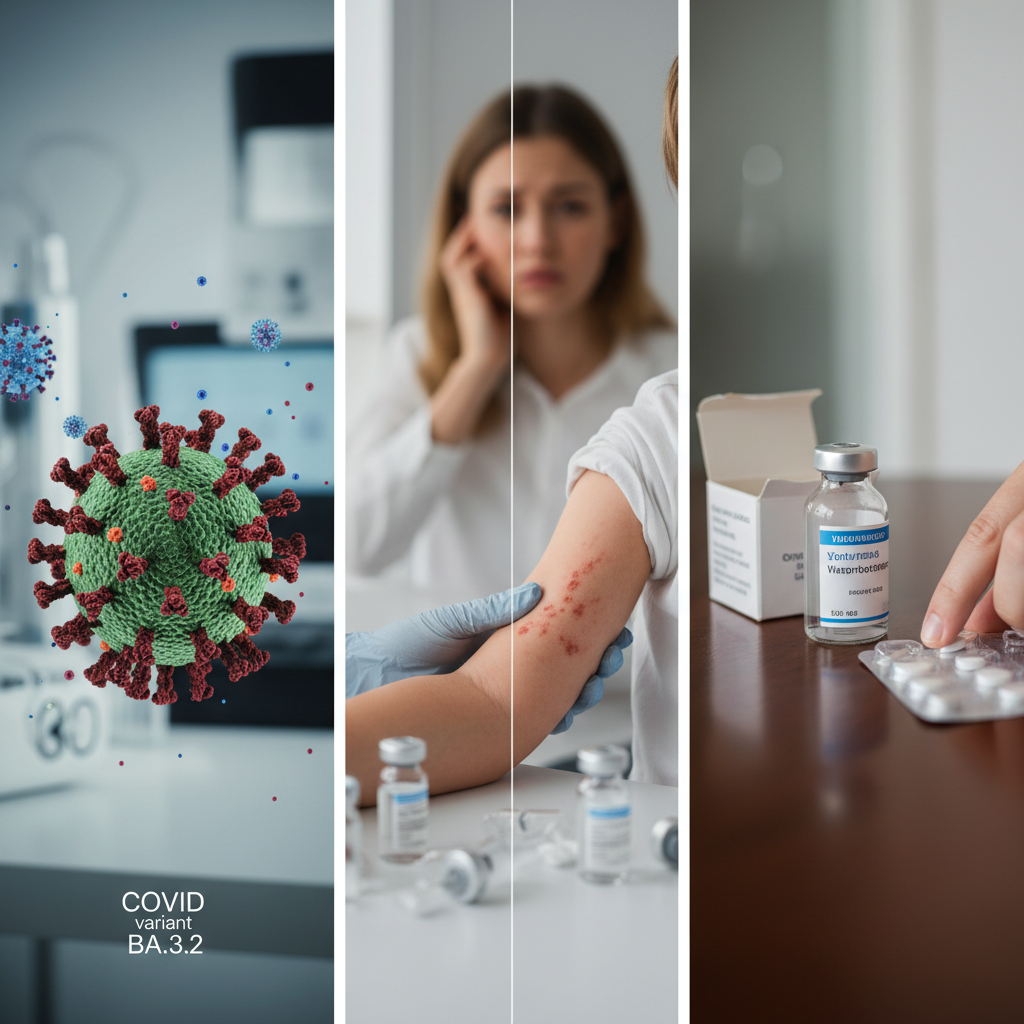
So, the COVID variant BA.3.2, it’s the *latest* curveball in our ongoing fight with the pandemic. This piece isn’t just about that new strain, though; it also connects it with two other pressing public health emergencies—a really surprising measles outbreak (all thanks to misinformation, wouldn’t you know?) and then there’s that debilitating shortage of cancer drugs, the ones that put so many lives on the line. Getting a handle on these interconnected problems is absolutely vital.
Getting a Grasp on the New COVID Variant BA.3.2
Viruses, especially RNA viruses like SARS-CoV-2, they’re always making tiny copies of themselves. Sometimes, a tiny mistake happens. You could think of it as a typo in a very long document, and those typos are precisely what we call mutations. When a virus picks up a particular new set of these mutations, well, that’s when we get a whole new variant. And that brings us right to the COVID variant BA.3.2. This one, a descendant of the Omicron family, shows a few notable changes on its spike protein—that’s the part it uses to get inside our cells—which has scientists watching very closely. It’s essentially a slightly different key for the same lock, and that *does* change things. What we’re beginning to understand is that this isn’t simply another letter in the Greek alphabet; it truly has some distinct characteristics.
How does BA.3.2 stack up against its predecessors? Let’s break it down:
Transmissibility: Oh, it’s *definitely* more contagious. While we’re still calculating an exact R-naught value, initial household studies—those tell-all glimpses into how it spreads at home—suggest it moves about 15-20% more efficiently than its immediate predecessors. It just seems to find a way to transmit, even with just brief contact.
Immune Evasion: This is where BA.3.2 really, truly sets itself apart. It’s quite adept at slipping past the immunity you might’ve built up from past infections or even recent vaccinations. So, breakthrough infections? They’re becoming more common, and that’s because of its unique mutational profile. It’s a frustratingly clever virus, wouldn’t you say?
Severity: So far, the data here remains cautiously optimistic. For most healthy folks, it doesn’t appear to cause more severe disease than previous Omicron strains. Hospitalization rates haven’t spiked dramatically, but of course, the sheer *number* of infections could still place a strain on healthcare systems.
Symptoms: The symptom profile? Very similar to other Omicron variants. Think that intense sore throat, fatigue, a nagging headache, and a runny nose. That classic loss of taste and smell, though, that’s quite rare these days.
The good news is that our current tools haven’t been rendered useless. Rapid antigen tests still pick up the new strain effectively, and treatments like Paxlovid continue to work well at preventing severe outcomes, if you take them early. The updated booster shots, while not a *perfect* match, still provide an important layer of protection against hospitalization and death from the COVID variant BA.3.2. But even as we grapple with a virus that always seems to be one step ahead, we’re simultaneously facing a crisis with a disease we really thought we’d already beaten. A preventable one.
Measles: A Preventable Disease Makes a Dangerous Comeback
While our collective focus remains understandably locked on the new COVID variant BA.3.2 and all its implications, a much older, and supposedly vanquished, foe is quietly staging a comeback. Measles. It’s not just a simple childhood rash, you know; it’s a highly contagious virus that can prove absolutely devastating. It typically starts with a high fever, a cough, and a runny nose, but the tell-tale signs are tiny white spots inside the mouth, called Koplik spots, soon followed by a full-body rash. The *real* danger, though, lies in its complications: pneumonia, brain swelling (encephalitis), and in some cases, even death. It’s a tragedy, really, because we’ve had a powerful weapon against it for decades.
The reason for its resurgence? It’s painfully simple: declining vaccination rates. This isn’t a failure of the vaccine itself; it’s actually a failure of public health strategy. The drop is fueled by a perfect storm—a mixture of vaccine hesitancy, rampant misinformation campaigns swirling across social media, and the immense disruption to routine immunization programs during the pandemic. That global scramble to manage threats like the COVID variant BA.3.2 inadvertently pushed these absolutely essential childhood shots to the back burner. Now, we’re seeing the consequences in flare-ups across the globe, from Sub-Saharan Africa and parts of Europe (yes, including the UK), to Southeast Asia and even isolated communities in the United States. To truly stop measles, we need strong herd immunity, which means about 95% of the population needs to be vaccinated. When coverage dips below that, the virus finds a crack, and it just comes roaring back. We’re truly witnessing a preventable disease return because of these gaps in our collective shield.
The Silent Epidemic: Navigating the Cancer Drug Shortage
While headlines are often dominated by infectious diseases—and rightly so, at times—a different kind of epidemic is quietly unfolding in oncology wards across the country. It’s a shortage of the very tools doctors rely on to fight cancer. We’re talking about cornerstone drugs, things like cisplatin and carboplatin, which are frontline chemotherapy agents for treating ovarian, testicular, lung, and bladder cancers, among so many others. These aren’t niche medications; they’re the absolute bedrock of countless treatment protocols. So, why are they suddenly so hard to find? The reasons are a complex, frustrating mix of factors.
Consider these intertwined issues:
Manufacturing and Quality Issues: Many of these are older, generic drugs, often produced in aging facilities. Just one contamination issue at a single plant can, you see, shut down a massive portion of the nation’s supply. It’s a house of cards, really.
Supply Chain Fragility: The global supply often relies on just a handful of manufacturers. This isn’t just inefficient; it’s downright dangerous. When one company falters, there’s simply no one to pick up the slack, a vulnerability laid bare during the pandemic and one that a new surge from the COVID variant BA.3.2 could easily exploit yet again.
Economic Factors: Simply put, there’s not much profit in old, generic injectable drugs. This sadly discourages companies from investing in modernizing their facilities or maintaining a well-functioning supply chain. It’s an unfortunate reality of the market.
The human cost of all this is absolutely staggering. Patients face terrifying treatment delays, are sometimes forced onto second-choice therapies that might be less effective or carry worse side effects, and ultimately, they see their chances of survival diminish. Oncologists are left making impossible decisions, collaborating with other hospitals to share scarce vials and carefully rationing what little they have. While the world’s attention is fixed on tracking the spread of the new COVID variant BA.3.2, this silent crisis in cancer care continues to deepen, a stark reminder of the hidden fragilities in our entire healthcare system. It makes you wonder, doesn’t it?
How the COVID Variant BA.3.2 Intensifies Other Crises
It’s tempting to view these health emergencies as separate lanes of traffic on a very busy, very dangerous highway. A new COVID variant popping up here, a measles outbreak happening over there, a cancer drug shortage tucked away in a corner. But that’s just not how it works in the real world. In reality, they are all crashing into each other, quite dramatically. There’s a powerful term for this phenomenon: a *syndemic*. It’s when multiple health crises converge and interact, making the total impact far greater than the sum of its individual parts. It’s not mere addition; it’s multiplication.
Imagine a healthcare system already stretched thin, perhaps even to its breaking point. Now, introduce a surge of infections from the new COVID variant BA.3.2. Hospitals quickly fill up again, emergency rooms become overwhelmed, and skilled staff are pushed to their absolute limit. Suddenly, there are fewer beds available, and less attention can be spared for children suffering from a measles outbreak. Public health teams get pulled from essential measles vaccination campaigns to manage the immediate COVID crisis. The messaging on other important health issues gets completely drowned out. The focus is simply lost.
Then consider the fragile supply chain for cancer drugs we just explored, that whole house of cards. Another pandemic wave, especially one driven by a variant like COVID variant BA.3.2, is like a strong, sudden gust of wind. It can cause new lockdowns, sick workers, and logistical nightmares that halt production or severely delay shipments of lifesaving chemotherapy agents. These, you see, are not separate problems at all. They are a tangled web, where a pull on one thread inevitably tightens the knots everywhere else, leaving patients—the most vulnerable among us—caught helplessly in the middle. How can we possibly untangle it all?
A 5-Point Action Plan for a More Resilient Future
So, where, exactly, do we go from here? Facing this triple threat—a new COVID variant, measles making a comeback, and deeply concerning drug shortages—can certainly feel overwhelming. But paralysis isn’t an option. We *have* to move forward, and the only way to do that is with a clear, deliberate plan aimed at building a more resilient future.
1. Combat Misinformation and Rebuild Trust
We’ve seen firsthand how lies create a parallel pandemic of mistrust, affecting everything from COVID boosters to those childhood immunizations we rely on. Public health agencies simply *must* ditch the jargon and speak to people directly, honestly, using trusted community leaders to get the message across. When people trust the source, they’re far more likely to listen to guidance about the COVID variant BA.3.2 or to ensure their child’s MMR vaccine is up to date. This is the foundational layer for everything else we do.
2. Strengthen Global Vaccine Programs
The intense COVID vaccine race inadvertently pulled valuable resources away from routine immunizations, globally. We simply can’t let that happen again. Strengthening these programs means funding global initiatives, yes, but also building effective local infrastructure everywhere. The system has to be able to handle a surge for a new virus while seamlessly continuing those measles and polio shots that have saved millions of lives. One can’t come at the expense of the other, can it?
3. Secure Medical Supply Chains
Running out of life-saving cancer drugs is, quite frankly, a catastrophic failure of our systems. Our supply chains are simply too fragile and far too dependent on just a few locations. The solution involves diversifying, bringing some essential manufacturing closer to home, and creating strategic stockpiles for emergencies. A system that can’t withstand a disruption caused by a new pandemic wave is fundamentally broken. This isn’t about protectionism; it’s just smart public health security.
4. Invest in Public Health Infrastructure
Our healthcare workers are exhausted, truly, and public health departments are running on fumes. We cannot keep lurching from crisis to crisis without significant investment in the core system itself. This means more staff, better pay, and modern tools like advanced surveillance systems to spot an outbreak early. We need well-equipped labs and data systems that actually *talk* to each other, seamlessly. This isn’t spending; it’s a vital investment in our collective safety.
5. Promote Global Cooperation
A virus doesn’t care about borders, and neither should our response. We need strong international agreements that ensure transparent data sharing—like genomic data on the COVID variant BA.3.2, for example—and equitable access to medicine. When a new threat emerges or a shortage hits, nations *must* work together. This isn’t idealism, you see. It’s pure pragmatism for our interconnected world.
Conclusions
We are truly at a pivotal moment where the COVID variant BA.3.2, preventable diseases like measles, and systemic failures such as drug shortages all converge. These issues powerfully highlight deep vulnerabilities in our global health infrastructure. An effective, coordinated response, one built on scientific evidence, public trust, and resilient supply chains, isn’t just an option—it’s an absolute necessity for our collective survival and well-being.