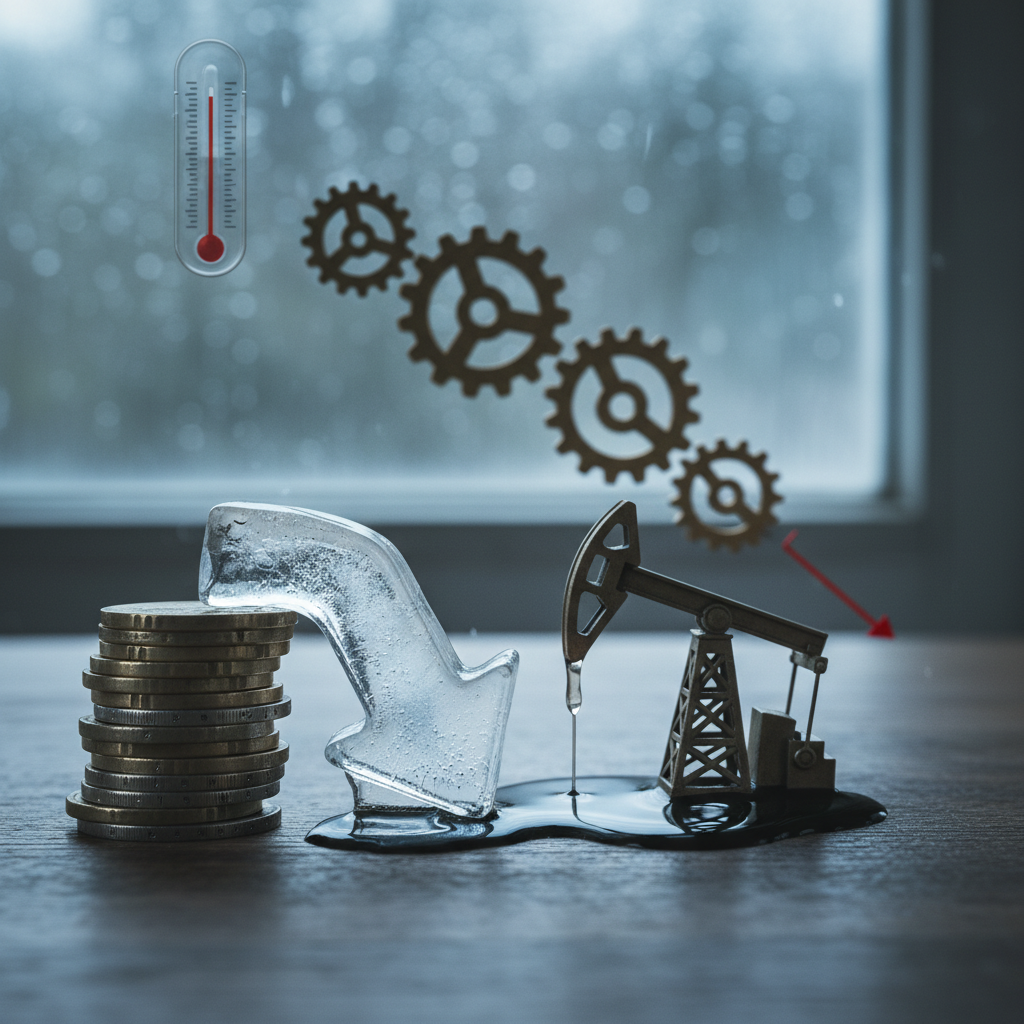
The inflation outlook for the coming year connects directly to two big global trends: the recent fall in oil prices and the careful interest rate policies from the European Central Bank. This article looks at how these elements are shaping our economic future, offering insights for consumers, investors, and businesses as they figure out these complex financial currents.
Understanding the Current Global Inflation Landscape
Before we dive into oil prices and what central banks are doing, we really need to step back and get the bigger picture. What *is* inflation, anyway? Simply put, it’s when your money just doesn’t buy as much as it used to — that euro in your pocket, well, it won’t stretch as far anymore. We follow this through something called the Consumer Price Index (CPI), which is basically a huge shopping basket of goods and services that shows us how prices are shifting. The big wave of inflation that hit the world wasn’t caused by one single thing, you know. It was more like a messy combination of events, a perfect storm, really. What mainly drove it was:
- The *post-lockdown rush*: Supply chains, which had pretty much stopped, suddenly had to handle a huge, pent-up demand for physical stuff. Sofas, computer chips — everything got caught in a bottleneck.
- *Global instability*: The war in Ukraine truly sent a shockwave, pushing energy and food prices sky-high and especially hurting the Eurozone, which imports so much energy.
- Consumers *changing their spending habits*: People stuck at home, often with more savings than usual, shifted from buying services (like travel or restaurant meals) to buying goods, which overwhelmed manufacturers.
Each big economy felt this crisis in its own way. The US, for instance, saw more inflation pulled by demand, really boosted by stimulus money. But the UK experienced a tough mix of everything, made even more complicated by Brexit. This global situation is so important because it helps explain why the inflation outlook for 2024 seems so layered. The initial problems are largely being fixed, but things have changed. Now, we’ve got to really focus on the two forces that really hold the most power over our economic future: the unpredictable cost of oil and the thoughtful, strong influence of the European Central Bank. These two aren’t just background noise anymore; they *are* the main event, and they’ll ultimately shape the inflation outlook for the coming year.
The Impact of Falling Oil Prices on the Economy
Just when we’d resigned ourselves to high energy costs sticking around forever, the global oil market did something unexpected — it surprised us. The recent dip in prices isn’t because of just one thing, no; it’s a pretty classic story of supply and demand, actually. On the supply side, output from countries outside OPEC, like the United States and Brazil particularly, has really shot up, adding a lot of barrels to the world market. And on top of that, some governments have kept releasing oil from their emergency reserves, making sure there’s even less tightness. But it’s not just about more oil, either. Demand is softening too. China’s long-anticipated economic recovery hasn’t been great, to say the least, which means it needs less energy. Throw in a slow but steady rise in energy efficiency and the gradual shift toward renewables, and you’ve got yourself a formula for lower prices.
The effects of all this — the *ripple effects* — are substantial, and they hit the economy almost instantly. For homes and businesses, it honestly feels like a heavy burden has been lifted.
- Lower prices at the gas pump and for home energy feel a bit like a small tax break for consumers, directly putting more money into their pockets that they can spend elsewhere. It’s a real, tangible relief people notice every week.
- Businesses, especially those in transportation and manufacturing where fuel and energy are major costs, see huge reductions in their operating expenses. This can boost profit margins and might even slow down price increases for goods and services.
- And this is *key*: it has a very strong calming effect on the overall inflation rate. Since energy makes up a big part of the Consumer Price Index, cheaper oil can quickly bring down the main inflation number, dramatically altering the short-term inflation outlook.
But this really creates a complicated situation for the European Central Bank. While falling headline inflation is certainly good news, the ECB remains cautious. They know this relief comes from volatile energy prices, not necessarily a widespread cooling of deeper price pressures. It makes their whole inflation outlook trickier, forcing them to wonder: should they respond to the positive news they see on the surface, or should they keep their sharp focus on the *stickier* core inflation that’s still hidden underneath?
The European Central Bank’s High-Stakes Interest Rate Strategy
So, with oil prices offering a little breathing room, everyone’s looking straight at Frankfurt, at the European Central Bank. The ECB has just one enormous job: keeping prices stable, which, for them, means getting inflation back down to their 2% target. Their main tool? The interest rate. It’s a pretty simple device, really. When they raise rates, borrowing costs more for everyone. Mortgages, car loans, plans for businesses to grow—everything becomes pricier. The idea is to cool down demand and, in theory, bring inflation under control. And it works the other way too; cutting rates encourages spending and investment.
But here’s the tricky part, the tightrope walk. They have to put a stop to inflation without actually bringing the economy to a halt. It’s a delicate balancing act, a really high-stakes game. If they go too hard with rate increases, you risk a recession. If they’re too lenient, inflation could become permanently embedded. That’s why they don’t just look at the headline inflation number, which, as we’ve talked about, is heavily swayed by those energy prices. No, they’re intensely focused on a different set of figures:
- *Core inflation*: This figure deliberately excludes the unpredictable prices of energy and food to give them a clearer picture of underlying price pressures.
- *Wage growth*: Are paychecks going up so quickly that they’re adding fuel to the inflationary fire?
- *GDP figures*: Is the economy strong enough to withstand the heavier cost of borrowing?
These various indicators paint a far less clear picture, one that significantly complicates the overall inflation outlook. Because of this, the markets are anxiously trying to guess the ECB’s next move — it’s a key piece of any believable inflation outlook for 2024. Will they claim victory and begin lowering rates soon, or will that stubborn core inflation force them to keep rates steady for longer than anyone wants?
A New Inflation Outlook for 2024 and Beyond
So, where does all this leave us, then? We’re watching a fascinating contest unfold between two very strong forces. On one side, falling oil prices are working like a much-needed brake on headline inflation. That’s good news. On the other, we have the European Central Bank, which isn’t just watching the price at the gas station but is also fixed on those stickier, deeper price pressures still hidden within the economy. This complex interaction — this push and pull — will really define the entire inflation outlook for the rest of 2024. Essentially, we’re looking at two quite different roads ahead. The first is what everyone hopes for: a *‘soft landing’*. In this scenario, lower energy costs successfully bring overall inflation back toward the 2% target, which gives the ECB the confidence to start cutting interest rates without sending the economy spiraling into a downturn. That’s the dream outcome, isn’t it? But then there’s the second, more difficult possibility: *persistent ‘core’ inflation*. Here, even if fuel gets cheaper, the cost of services and the impact of decent wage growth keep that underlying inflation uncomfortably high. This would put the ECB in a really tough spot, possibly forcing them to keep rates higher for much longer than anyone would prefer. Which road we ultimately take isn’t set in stone. It depends on a few important things everyone’s watching very closely:
- *Wage trends*: Are pay raises simply catching up to past inflation, or are they actually creating a *new* round of price pressures? This might be the single most vital factor for the ECB right now.
- *Global stability*: The current comfort in oil prices is pretty fragile. Any new conflict or hiccup in supply chains could send them surging again, completely changing the inflation outlook in a flash.
- *Consumer confidence*: Will households feel secure enough to spend, or will economic uncertainty make them save more? That’ll really determine how strong domestic demand is.
How to Strategically Navigate This Economic Climate
With these possible scenarios laid out, what does it all actually *mean* for you? This isn’t just abstract economic talk; these shifts have real-world effects on our money, our investments, and our businesses. Let’s break down how to best play your hand.Consumers
That feeling of relief you get at the gas pump, it’s certainly real. But don’t let those cheaper energy bills make you feel *too* safe. Instead of just spending the extra cash, think a little smarter about it. This is a great chance to pay down high-interest credit card debt or, finally, build up that emergency fund you’ve been meaning to save. Why? Because even if headline inflation is easing, those ‘sticky’ core prices on things like services probably won’t move much. If you’re thinking about a big purchase that requires a loan, say a new car, securing a fixed rate soon could be a smart move. The ECB is hinting at rate cuts, but *when* they’ll happen is still anyone’s guess. A bit of caution often pays off.Investors
For investors, this environment is a bit of a riddle. An improving *inflation outlook* could really power a rally in stocks, particularly in areas tied to consumer spending. A genuine ‘soft landing’ would be fantastic for growth stocks. But then again, if the ECB has to keep rates higher for longer to fight core inflation, bonds suddenly start looking more appealing. Their yields are pretty good, and their prices would climb once rates eventually fall. So, the key thing here is finding a balance. A varied portfolio — one with a mix of quality stocks and some government bonds — seems like the most sensible way forward. It helps cover your bases, no matter which scenario unfolds.Business Owners
Lower energy costs? That’s a direct boost to your bottom line, especially if you’re involved in logistics or manufacturing. But what about your pricing? It’s tempting to hold prices steady and just enjoy the bigger margins, but your competitors might be thinking about cutting theirs to gain market share. It’s a careful dance, that. And then there’s borrowing. If you need money to expand, the question becomes: do you secure a loan now, or do you wait for potential ECB rate cuts? Your decision should genuinely hinge on your business’s stability and how you see the long-term *inflation outlook*. Thinking ahead about your financing needs now is incredibly important.
A Look Ahead
The economy, you see, is standing at a very important point. While falling oil prices could bring some relief, the ECB’s careful handling of interest rates will truly decide the inflation outlook. By understanding these linked forces, people and businesses can better prepare for whatever financial ups and downs come their way in the months ahead.

Finance strategist and editorial contributor specializing in corporate trends, investment dynamics, and economic policy. Laura writes for business leaders navigating an increasingly complex financial landscape.